
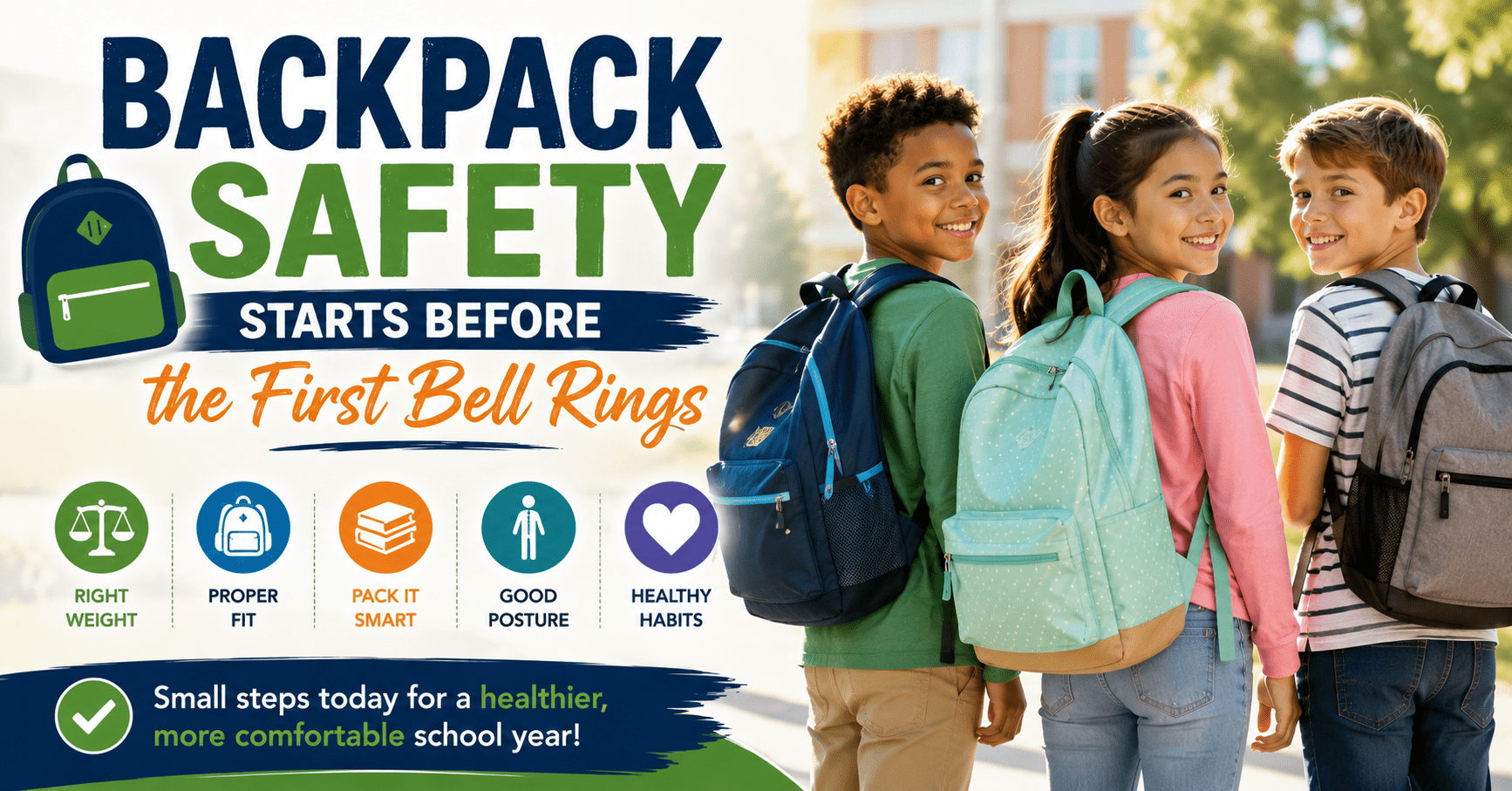
Back-to-school season is an exciting time for families. New teachers, new friends, new school supplies—and, of course, a new backpack.
While many parents spend time picking out the perfect backpack with their child, they may not realize that how a backpack fits and how it’s worn can have a big impact on a child’s comfort, posture, and overall well-being throughout the school year.
From heavy textbooks and laptops to sports equipment and musical instruments, today’s students often carry more than ever before. An overloaded or poorly fitted backpack can place unnecessary stress on growing muscles and joints, leading to fatigue, discomfort, and poor posture.
The good news? A few simple habits can make a big difference.
Why Backpack Safety Matters
Think about how many hours your child spends carrying a backpack every week. Between walking into school, changing classes, heading home, and extracurricular activities, that backpack becomes a daily companion.
When a backpack is too heavy or doesn’t fit properly, children may:
- Lean forward while walking
- Round their shoulders
- Arch their lower back
- Walk with an uneven gait
- Experience neck, shoulder, or back discomfort
Over time, these compensations can strain muscles and make carrying a backpack more difficult than it needs to be.
The goal isn’t to scare parents—it’s to help children develop healthy habits that support good posture and comfortable movement.
Start with the Right Backpack
Not all backpacks are created equal.
When shopping for a backpack, look for one that includes:
- Wide, padded shoulder straps
- A padded back panel
- Multiple compartments for even weight distribution
- Adjustable shoulder straps
- A waist or chest strap for heavier loads, if appropriate
The backpack should fit your child’s body—not overwhelm it.
Ideally, it should rest in the middle of the back and not hang several inches below the waist.
How Heavy Is Too Heavy?
One of the most common questions chiropractors hear is:
“How much should my child’s backpack weigh?”
Many healthcare organizations recommend that a loaded backpack weigh no more than about 10–15% of a child’s body weight.
For example:
- A 60-pound child should carry approximately 6–9 pounds.
- An 80-pound child should carry approximately 8–12 pounds.
- A 100-pound child should carry approximately 10–15 pounds.
While these are general guidelines, every child is different. If your child consistently struggles to lift or carry a backpack comfortably, it may be time to lighten the load.
Pack It Smart
What goes into the backpack matters just as much as how much it weighs.
Encourage your child to:
- Place heavier books closest to the back.
- Use all compartments to distribute weight evenly.
- Remove unnecessary items each evening.
- Carry only what they’ll need that day whenever possible.
A few extra items may not seem like much, but they can quickly add unnecessary weight.
Two Straps Are Better Than One
Many students—especially older children—like to sling a backpack over one shoulder because it looks cool or feels convenient.
Unfortunately, carrying a backpack this way forces one side of the body to work much harder than the other.
Using both shoulder straps helps distribute weight more evenly across the shoulders and back while encouraging better posture and balance.
If the backpack has a chest or waist strap, using it can help reduce movement and improve comfort, especially when walking longer distances.
Lift It the Right Way
Backpack safety doesn’t begin once the backpack is on.
Teach children to:
- Bend at their knees when picking up a heavy backpack.
- Avoid twisting while lifting.
- Put one shoulder strap on first, then the other.
- Adjust the straps so the backpack rests snugly against the back.
These simple habits can reduce unnecessary strain.
Watch for the Warning Signs
Sometimes children won’t tell parents when something hurts because they assume it’s normal.
Keep an eye out for signs such as:
- Complaints of neck, shoulder, or back pain
- Tingling or numbness in the arms
- Red marks from shoulder straps
- Leaning forward while walking
- Frequently shifting the backpack from shoulder to shoulder
- Difficulty putting the backpack on or taking it off
If these issues continue even after adjusting the backpack, it’s worth discussing them with your healthcare provider.
More Than Just Backpacks
Back-to-school doesn’t just mean carrying books.
Students also spend long hours:
- Sitting at desks
- Using laptops and tablets
- Looking down at phones
- Participating in sports
- Carrying band instruments and athletic gear
These daily activities all affect posture and movement.
Encouraging regular physical activity, stretching, healthy sleep habits, and ergonomic study spaces at home can help children feel and perform their best throughout the school year.
How Chiropractic Care Can Help
Children’s bodies are constantly growing and adapting.
Chiropractors evaluate posture, movement, joint function, and the overall health of the musculoskeletal system. If a child is experiencing discomfort related to carrying a backpack or other everyday activities, a chiropractor can help identify movement restrictions, offer practical advice, and recommend strategies to support healthy posture and function.
Many chiropractors also enjoy helping families properly fit backpacks and teaching children healthy lifting and carrying habits that can benefit them well beyond the classroom.
Make Backpack Checks Part of Your Back-to-School Routine
Parents already make sure their children have the right school supplies, new shoes, and clothes that fit.
Why not add one more item to the checklist?
Take a few minutes before school starts to:
- Check that the backpack fits properly.
- Weigh it once it’s packed.
- Adjust the shoulder straps.
- Make sure your child uses both straps.
- Remove unnecessary items.
- Encourage good posture and regular movement.
These small steps can help children stay comfortable, confident, and ready to learn.
A Healthy School Year Starts with Healthy Habits
Backpack safety isn’t about having the trendiest backpack—it’s about helping children move comfortably, maintain good posture, and develop healthy habits that can last a lifetime.
By choosing the right backpack, packing it wisely, and carrying it correctly, parents can help reduce unnecessary strain and support their child’s growing body.
As your family gets ready for another school year, remember that healthy backs help support healthy kids—and healthy kids are better prepared to learn, play, and thrive.
Tip: If your child regularly complains of back, neck, or shoulder discomfort—or you notice changes in posture while they’re carrying a backpack—talk with your chiropractor. A quick evaluation and a few simple adjustments to backpack fit or daily habits may help keep them comfortable all school year long.