
You wake up tired.
Your shoulders are tight. Your neck aches. You haven’t been sleeping well. You’re having more headaches than usual. You’re short-tempered with people you care about, struggling to concentrate at work, and even the things you normally enjoy feel like one more item on your to-do list.
So you tell yourself the same thing many of us do:
“I’m just busy. It’ll get better when things slow down.”
But what happens when things don’t slow down?
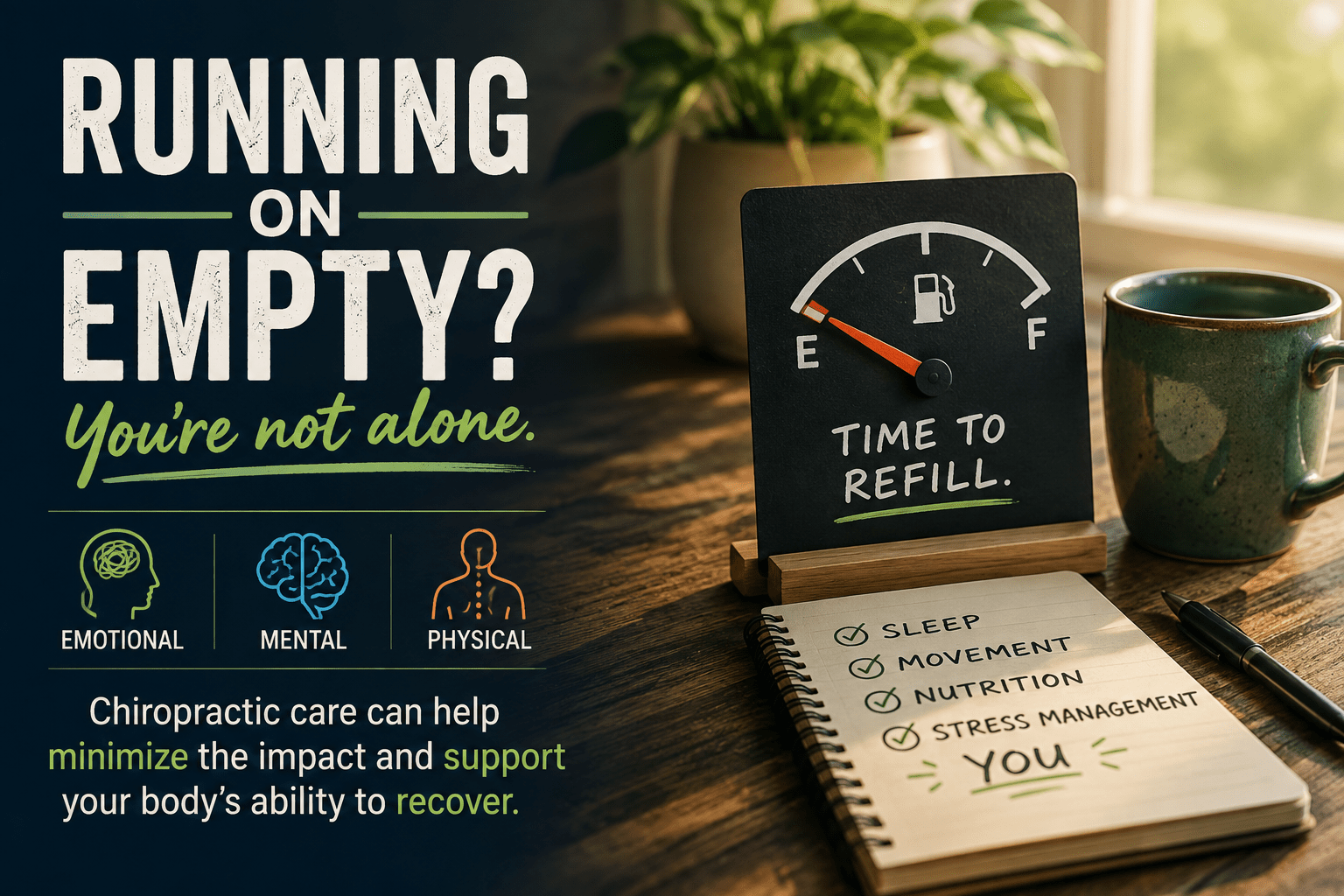
You may be running on empty.
Burnout Isn’t Just in Your Head
When we hear the word burnout, we often think about emotional exhaustion — feeling overwhelmed, unmotivated, irritable, or simply “done.”
But burnout can affect much more than your mood.
Long periods of stress can take a toll on both your mind and your body. When you’re constantly juggling work, family responsibilities, financial pressures, packed schedules, and everything else life throws your way, your body may spend too much time in a heightened state of stress.
Eventually, you may start noticing the consequences.
Common signs associated with prolonged stress and burnout can include:
- Persistent fatigue or feeling exhausted even after resting
- Difficulty falling asleep or staying asleep
- Headaches
- Neck, shoulder, or back discomfort
- Muscle tension
- Difficulty concentrating
- Irritability or feeling emotionally drained
- Changes in appetite
- Decreased motivation
- Less interest in exercise, hobbies, or social activities
- Feeling like you’re constantly “on”
One symptom by itself doesn’t necessarily mean you’re experiencing burnout. But when several begin showing up together — especially over an extended period — your body may be telling you something important.
It’s time to pay attention.
Your Body Has a Stress Response for a Reason
Stress isn’t always bad.
Your body’s stress response is designed to help you deal with challenges. When something stressful happens, your nervous system responds, preparing your body to take action.
That’s incredibly useful when you need it.
The problem is that modern stress doesn’t always disappear after the immediate challenge passes.
The email keeps coming. The phone keeps buzzing. The deadlines keep moving. The kids need somewhere to be. The bills still need to be paid. And tomorrow’s calendar looks just as full as today’s.
When stress becomes chronic, the body may have fewer opportunities to truly relax and recover.
Muscles may remain tense. Sleep may suffer. Physical activity may decrease. Poor posture can creep in as exhausted people spend more time sitting, scrolling, or working at a computer.
And those factors can begin feeding one another.
Stress contributes to tension. Tension can contribute to discomfort. Discomfort can interfere with sleep. Poor sleep can leave you with less energy to exercise or manage stress.
Before long, you’ve created a cycle that’s difficult to escape.
Where Does Chiropractic Care Fit In?
Chiropractic care isn’t a magic “off switch” for stress, nor is it a cure for emotional or mental burnout.
But chiropractic care can be an important part of a larger strategy for taking care of yourself — particularly when prolonged stress is accompanied by musculoskeletal discomfort, stiffness, reduced mobility, or other physical concerns.
Doctors of chiropractic focus on the neuromusculoskeletal system and can evaluate how your joints, muscles, movement patterns, posture, and daily habits may be contributing to the way you feel.
Depending on your individual needs, your chiropractor may use chiropractic adjustments, exercises, stretching, ergonomic recommendations, or other conservative approaches designed to improve function and help you move more comfortably.
And sometimes, feeling better physically makes it easier to begin taking care of yourself in other ways.
When your neck doesn’t hurt every time you turn your head, taking a walk sounds more appealing.
When your back isn’t bothering you all evening, you’re more likely to stay active.
When you’re moving more comfortably, it may be easier to exercise, participate in activities you enjoy, and maintain the healthy routines that often disappear when life gets overwhelming.
That’s why chiropractic care can be valuable not only when something hurts, but as part of a proactive approach to maintaining your physical health.
Don’t Wait Until the Tank Is Empty
One of the biggest mistakes we make with burnout is waiting until we’re completely exhausted before doing something about it.
Think about the warning light on your car’s dashboard.
You wouldn’t see the oil light come on and say, “I’ll deal with that in six months.”
Yet we often do something very similar with our bodies.
The stiff neck that appears every afternoon.
The headaches that are becoming more frequent.
The backache you keep ignoring.
The nights when you can’t seem to get comfortable.
The exhaustion that never quite goes away.
These aren’t things you simply have to accept as the price of being busy.
Pay attention to the warning lights.
Five Ways to Start Refilling Your Tank
Recovering from burnout usually isn’t about making one enormous life change. Often, it’s about consistently making smaller choices that give your mind and body opportunities to recover.
- Protect your sleep.
Create a consistent bedtime, reduce screen time before bed, and make sleep something you schedule rather than something you squeeze in after everything else is finished.
- Keep moving.
You don’t need an intense workout every day. Walking, stretching, gardening, biking, or simply getting away from your desk regularly can help keep your body moving.
- Give yourself actual breaks.
Scrolling through social media while answering emails isn’t a break. Step outside. Take a walk. Eat lunch away from your computer. Give your brain and body a chance to disengage.
- Pay attention to physical discomfort.
Don’t normalize persistent aches, stiffness, headaches, or reduced mobility. If something doesn’t feel right, talk with an appropriate healthcare professional rather than simply learning to live with it.
- Know when you need more help.
Burnout can involve physical, emotional, and mental health. Chiropractic care can address certain physical aspects, but it isn’t a substitute for mental health care or medical treatment when those are needed. If you’re struggling with persistent anxiety, depression, severe exhaustion, or other concerning symptoms, talk with your healthcare provider or a qualified mental health professional.
Taking care of yourself may require a team — and there’s nothing wrong with that.
You Can’t Pour From an Empty Cup
We spend enormous amounts of energy taking care of everything around us.
Our jobs.
Our families.
Our homes.
Our responsibilities.
Our communities.
But there’s one person who often ends up at the bottom of the list:
You.
Taking care of your physical health isn’t selfish. It’s one of the things that allows you to continue showing up for the people and responsibilities that matter most.
So this September, check your gauge.
Are you sleeping well? Are you moving regularly? Are you constantly tense? Are those nagging aches becoming more frequent? Are you giving yourself opportunities to recover — or simply pushing through another day?
If your body has been sending you warning signs, don’t wait until you’re completely running on empty.
Listen to it. Take care of it. And give yourself permission to refill the tank.